
We have been asked how people can continue to support their parish when we cannot put money in the plate at church. If your income has been impacted by the crisis, please do not feel obliged to contribute at this time. If your income is secure the best option would be to set up a standing order (if your circumstances change these can be amended/cancelled).
Please find attached the form to be sent to your bank: Updated Standing Order form
If you have online banking you can set up a standing order form quickly using the parish sort code and account number. If you don’t have online baking, we have standing order forms available which you can complete, sign and post to your bank (using the branch address on your cheque book or bank statement). Alternatively, you can donate using electronic banking.
The Parish account details are:
Sort Code: 833300
Account Number: 19119778
Account name – Archdiocese of St Andrews & Edinburgh The Most Holy Trinity – Fife
(Please include your name as the payment reference)
Thank you for your continued support to the life of the Church and for your generosity.
_________________________________________________________________________________
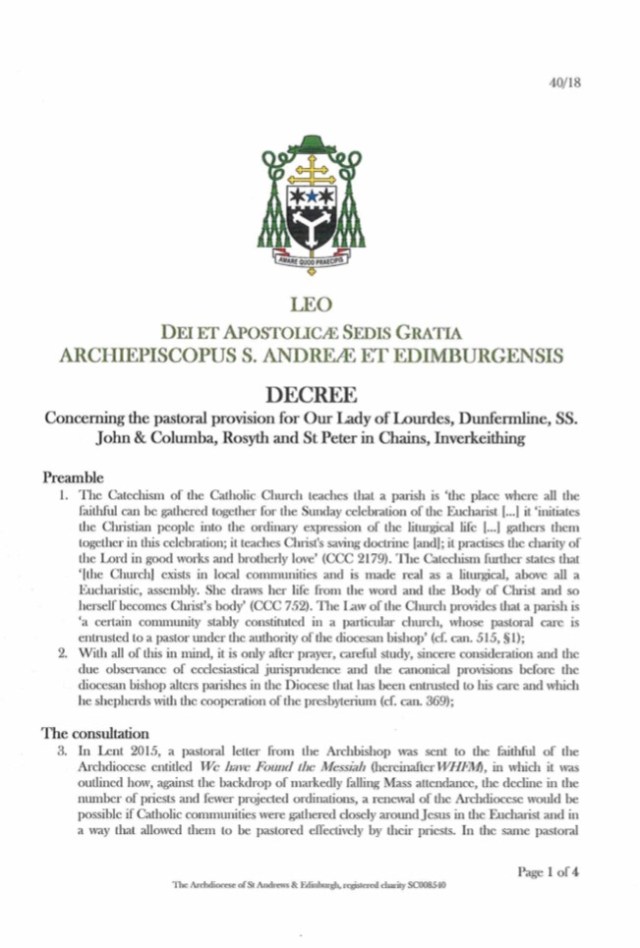
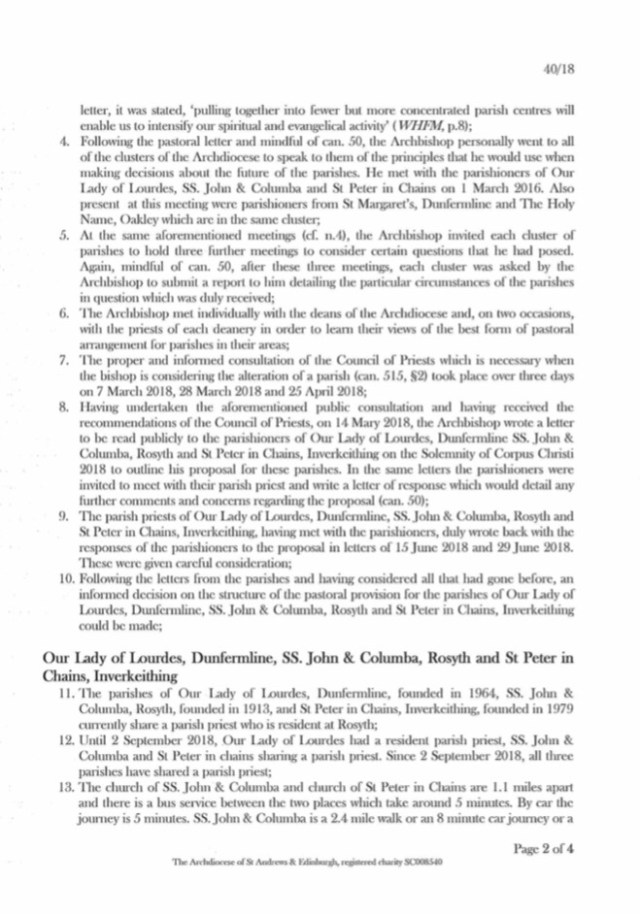
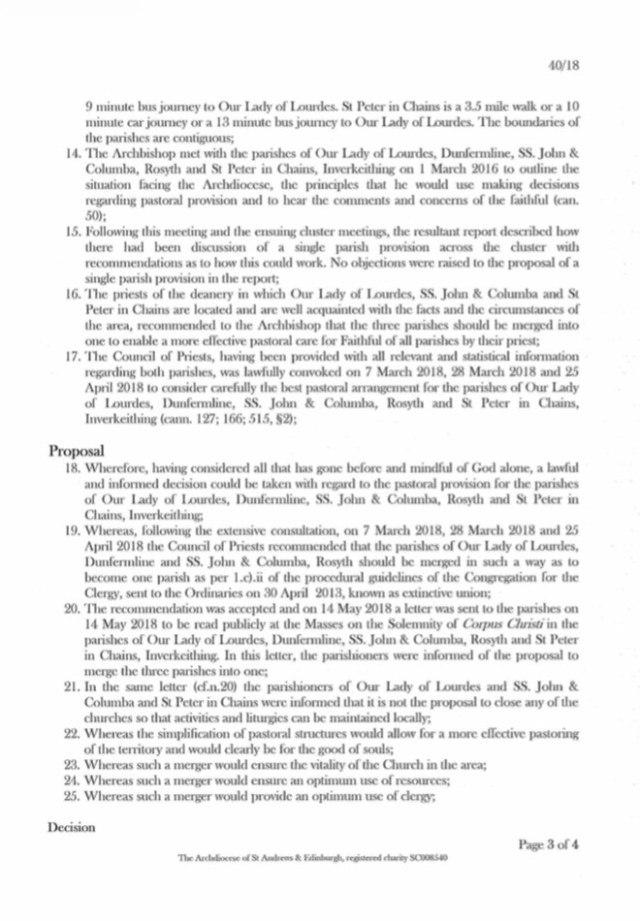
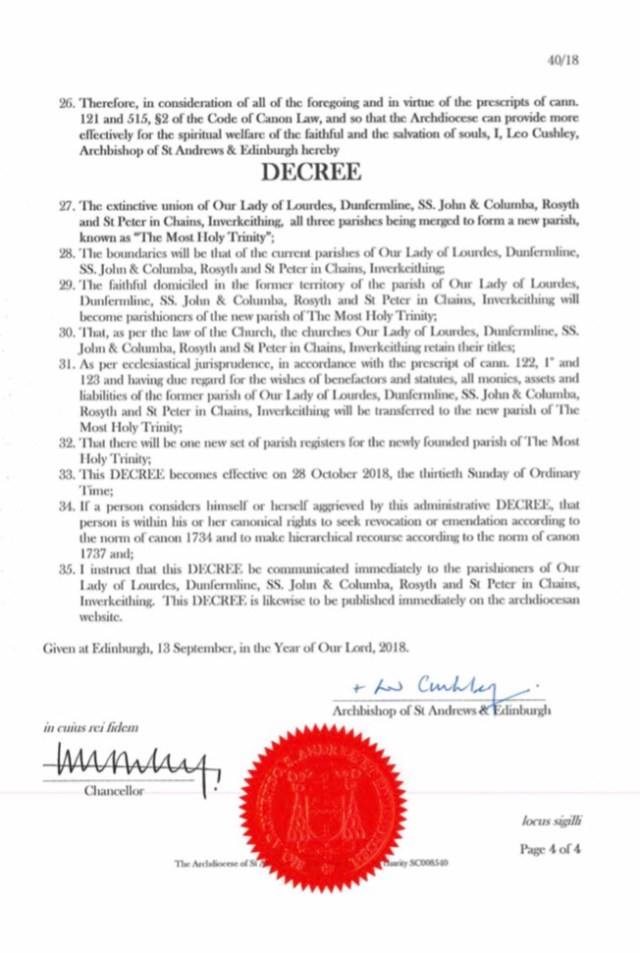 The decree can be found on the archdiocesan website by using the following link: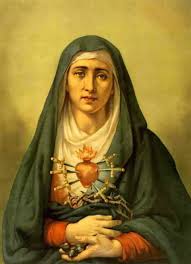
 This feast dates back to the 12th century. It was especially promoted by the Cistercians and the Servites, so much so that in the 14th and 15th centuries it was widely celebrated throughout the Catholic Church. In 1482 the feast was added to the Missal under the title of “Our Lady of Compassion.” Pope Benedict XIII added it to the Roman Calendar in 1727 on the Friday before Palm Sunday. In 1913, Pope Pius X fixed the date on September 15. The title “Our Lady of Sorrows” focuses on Mary’s intense suffering during the passion and death of Christ. “The Seven Dolors,” the title by which it was celebrated in the 17th century, referred to the seven swords that pierced the Heart of Mary. The feast is like an octave for the birthday of Our Lady on September 8th.
 This day is also called the Exaltation of the Cross, Elevation of the Cross, Holy Cross Day, Holy Rood Day, or Roodmas. The liturgy of the Cross is a triumphant liturgy. When Moses lifted up the bronze serpent over the people, it was a foreshadowing of the salvation through Jesus when He was lifted up on the Cross. Our Mother Church sings of the triumph of the Cross, the instrument of our redemption. To follow Christ we must take up His cross, follow Him and become obedient until death, even if it means death on the cross. We identify with Christ on the Cross and become co-redeemers, sharing in His cross.
 St Cuthbert was a Scot. Orphaned when a young child, he was a shepherd for a time, possibly fought against the Mercians, and became a monk at Melrose Abbey in the Borders. In 661, he accompanied St. Eata to Ripon Abbey, which the abbot of Melrose had built, but returned to Melrose the following year when King Alcfrid turned the abbey over to St. Wilfrid, and then became Prior of Melrose. Cuthbert engaged in missionary work and when St. Colman refused to accept the decision of the Council of Whitby in favor of the Roman liturgical practices and immigrated with most of the monks of Lindisfarne to Ireland, St. Eata was appointed bishop in his place and named Cuthbert Prior of Lindisfarne. He resumed his missionary activities and attracted huge crowds until he received his abbot’s permission to live as a hermit, at first on a nearby island and then in 676, at one of the Farnes Islands near Bamborough. Against his will, he was elected b
 The Catholic Parish of the Most Holy Trinity